 70° and Clear



Image
A Brief History of July 4th on Long Island
By Samantha — Long Island Daily News
Independence Day on Long Island has always been more than a date on the calendar. It’s a tradition woven through generations of beachgoers, boaters, parade watchers, and families who mark the holiday with a mix of small‑town pride and coastal celebration.
Long Island’s July 4th story begins long before the Island became the sprawling suburb it is today. In the late 1700s, many towns — Hempstead, Huntington, Southampton — were small farming and whaling communities. When the Declaration of Independence was signed, Long Islanders were divided: some supported the revolution, while others remained loyal to the Crown. British troops occupied much of the Island during the war, so early Independence Day observances were quiet, cautious, and often symbolic rather than public.
After the war, towns began holding modest gatherings — church bells ringing at noon, militia drills on village greens, and speeches from local officials. These early celebrations set the foundation for the community‑centered holiday Long Island still embraces.
By the mid‑1800s, July 4th had become a true public holiday. Towns organized parades featuring veterans of the War of 1812 and, later, the Civil War. Brass bands marched down Main Streets, children waved small flags, and local fire companies proudly displayed their engines.
Many of these traditions survive today. Babylon, Northport, and Port Jefferson still host parades that feel remarkably similar to those held more than a century ago — the same small‑town charm, the same sense of shared identity.
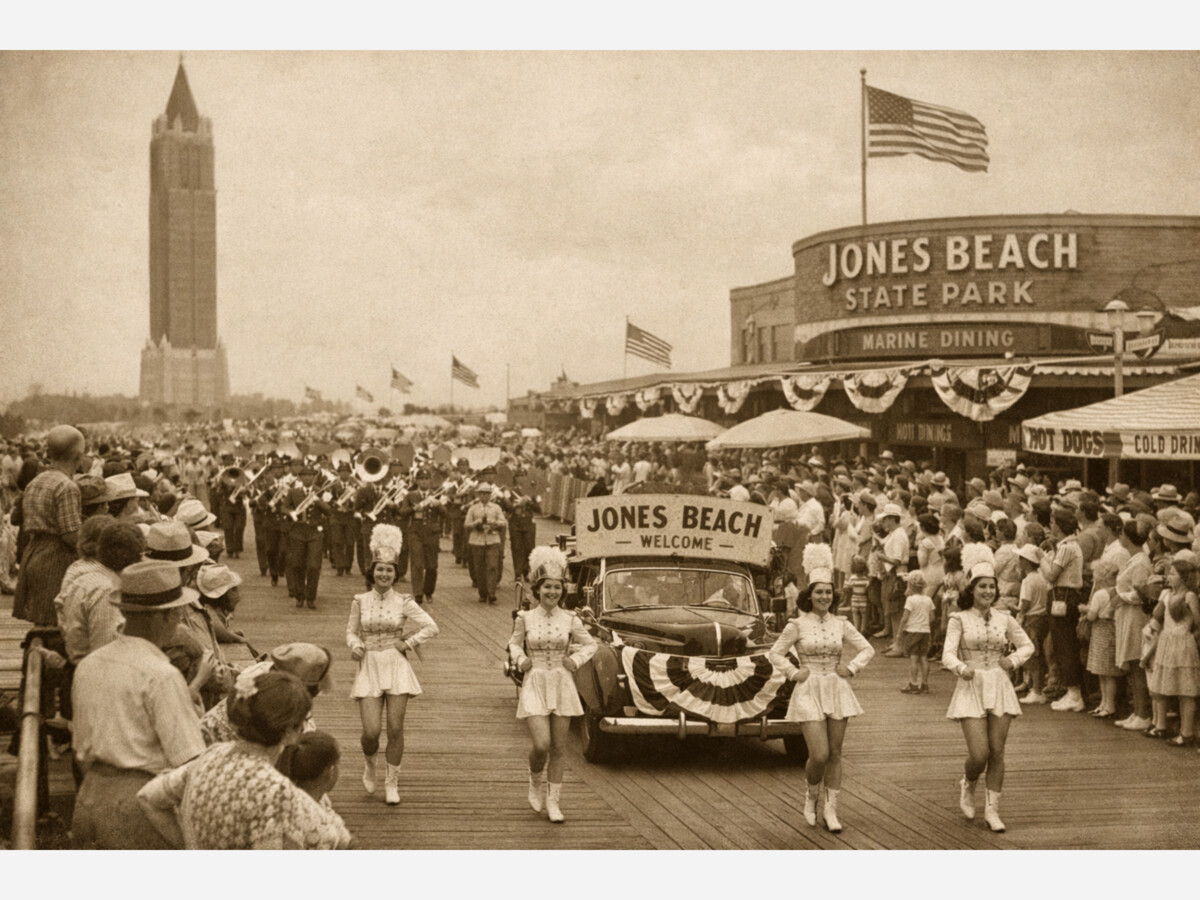
The early 20th century transformed Long Island’s July 4th forever. As Jones Beach opened in 1929 and Robert Moses expanded parkways across the Island, Independence Day shifted from village greens to sandy shorelines.
Families packed picnic baskets and headed to the ocean. Lifeguards became holiday icons. Boardwalks buzzed with music, food stands, and patriotic decorations. Fireworks over the water became the centerpiece of the night, drawing crowds from across the region.
By the 1950s and 60s, July 4th at Jones Beach was practically a rite of passage — a place where generations of Long Islanders learned to swim, sunbathe, and celebrate under the same Atlantic breeze.
North Shore communities developed their own July 4th identity. Harbors in Huntington, Northport, and Port Jefferson filled with sailboats and motorboats decorated with flags. Families anchored offshore to watch fireworks reflect across the Sound, creating a floating audience that has become one of the Island’s most beloved holiday scenes.
Today, July 4th on Long Island is a blend of old and new. Parades still roll through historic downtowns. Beaches still fill before noon. Fireworks still light up the sky from Wantagh to Montauk.
But the holiday has also grown into a major regional event — with concerts, food festivals, marina parties, and large‑scale fireworks shows drawing tens of thousands. Police and fire departments prepare weeks in advance. Towns open cooling centers. Traffic patterns shift to accommodate the crowds.
Despite all the modern logistics, the heart of the holiday remains unchanged: families gathering, communities celebrating, and Long Islanders embracing the summer spirit that defines the region.
Ask any longtime resident, and they’ll tell you July 4th on Long Island isn’t just a celebration of independence — it’s a celebration of place. The beaches, the boats, the boardwalks, the parades, the fireworks over the water. It’s the Island at its most vibrant, most nostalgic, and most unmistakably itself.

Sunny, with a high of 72 and low of 64 degrees. Clear for the morning, sunny in the afternoon, overcast in the evening, clear overnight.