Image



By Samantha Vogel | Long Island Daily News
As colder weather approaches Long Island, many of us will begin preparing our homes for the months ahead. We will turn on the heat, pull out our winter coats and make sure our families and pets are warm and comfortable.
But outside our homes are countless community cats who don’t have that same protection.
They may be feral cats who have lived outdoors their entire lives, abandoned pets struggling to survive, or frightened and lost cats that haven’t found their way home.
Whatever brought them outdoors, they all have one thing in common:
They get cold, too.
That is why I strongly encourage anyone who is able to consider putting out a small winter shelter for an outdoor cat.
It doesn’t have to be expensive.
It doesn’t have to be beautiful.
And you certainly don’t have to be an expert at building things.
Sometimes a simple, inexpensive shelter placed in a safe location can give an outdoor cat somewhere to escape the wind, snow, rain and freezing temperatures.
A Little Kindness Goes a Long Way
I know many people who care about animals already know how to make winter shelters for community cats. There are wonderful rescuers, colony caretakers and animal advocates across Long Island who have been doing this work for years.
But there are also people who may see an outdoor cat in their neighborhood and want to help but simply don’t know where to begin.
I recently used AI to help come up with some simple and inexpensive ideas for outdoor cat shelters, and I wanted to share those ideas with others.
You don’t necessarily need to purchase an expensive outdoor cat house.
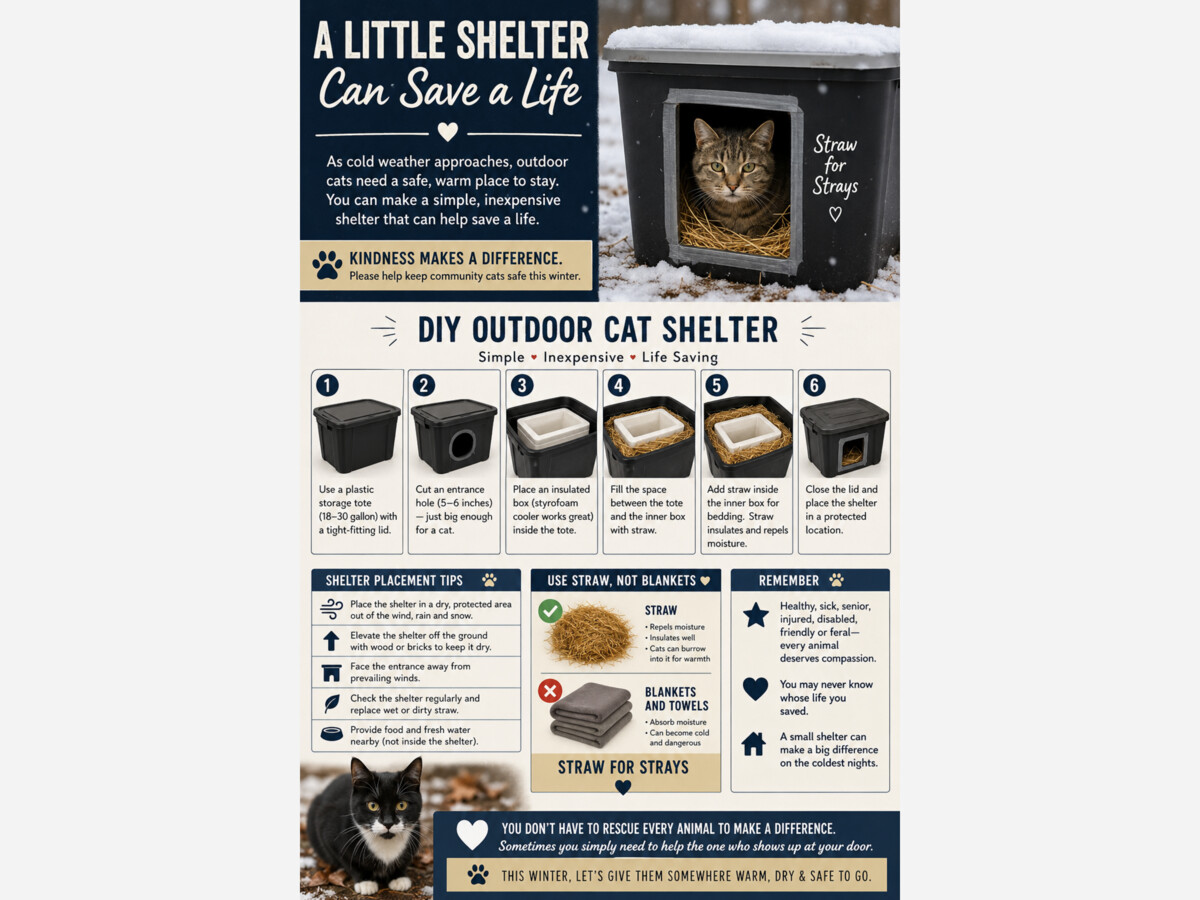
A properly prepared plastic storage tote or similar weather-resistant container can be transformed into a small shelter.
The goal is simple: keep the interior dry, insulated and protected from the wind.
One Important Detail: Use Straw, Not Blankets
It may seem natural to put blankets, towels or clothing inside an outdoor cat shelter. After all, that is what we use to keep our indoor pets comfortable.
But outdoor shelters are different.
Straw is generally a better choice for insulation than blankets, towels or fabric bedding.
Fabric can absorb moisture. Once wet, it can become extremely cold and potentially make conditions worse for the animal.
Straw helps repel moisture and gives cats material they can burrow into for warmth.
Remember the simple rule:
Straw for strays.
Simple Shelter Ideas
A basic shelter can be made using a sturdy plastic storage tote with a small entrance cut into the side. An insulated container can be placed inside, with straw packed around and inside the protected sleeping area.
The shelter should be elevated slightly from the ground whenever possible and positioned so the entrance isn’t directly facing prevailing wind, rain or snow.
Keep the entrance only large enough for a cat to comfortably enter and exit. A smaller opening helps retain warmth and may also discourage larger animals from entering.
Check the shelter throughout the winter to make sure it remains dry and that the straw hasn’t become wet or dirty.
Food and fresh water are also incredibly helpful, although food generally should not be placed inside the sleeping shelter itself.
And always use caution with heating devices or anything electrical outdoors. A well-insulated, dry shelter can provide protection without creating unnecessary fire or electrical hazards.
What If the Cat Looks Sick, Injured or Disabled?
Please don’t assume that an outdoor cat doesn’t deserve help because the animal looks sick, elderly, injured or disabled.
Those may be the animals who need our compassion the most.
If you encounter a cat who appears seriously injured, ill or unable to care for itself, contact an experienced local rescue, animal shelter or veterinary professional for guidance.
And remember that being feral does not mean an animal doesn’t matter.
Being old does not mean an animal doesn’t matter.
Being disabled does not mean an animal doesn’t matter.
Being sick does not mean an animal doesn’t matter.
Every animal deserves compassion.
You May Never Know Whose Life You Helped
The cat using your shelter may never let you pet them.
They may never come close enough for you to touch them.
You may only catch a glimpse of them slipping inside late at night.
That’s okay.
Kindness doesn’t require recognition.
Imagine being outside on one of Long Island’s freezing winter nights with nowhere warm or dry to go.
Then imagine finding a small shelter filled with dry straw, protected from the wind.
To us, it may look like a plastic tote that cost only a few dollars and took a short time to prepare.
To that cat, it may be the safest place they have.
Let’s Help Them Before Winter Arrives
I’m sharing these ideas now because we don’t have to wait until temperatures are freezing to start preparing.
If you have an outdoor cat visiting your property, consider putting out a shelter.
If you care for a colony, start checking and preparing your shelters now.
If you can’t build one yourself, perhaps donate supplies to someone who can.
If you have extra storage totes or straw, consider giving them to a local rescue or community cat caretaker.
And if you know someone who has outdoor cats around their home, share this information with them.
One person may see this story and decide to put a shelter in their yard.
One cat may discover it.
And on the coldest night of the year, that small act of kindness could make an enormous difference.
You don’t have to rescue every animal to make a difference.
Sometimes you simply need to help the one who shows up at your door.
This winter, let’s give them somewhere warm, dry and safe to go.
🐾 Healthy, sick, senior, injured, disabled, friendly or feral — every animal deserves compassion, protection and a chance.
:::


Sunny, with a high of 58 and low of 50 degrees. Sunny in the morning, clear in the afternoon and evening,