58° and Partly Cloudy
Long Island’s Cats Need Our Help: Shelters, Rescues and Volunteers Fight to Give Them a Second Chance



By Samantha Vogel
Long Island Daily News
LONG ISLAND, N.Y. — In shelters, foster homes, backyards, parking lots and neighborhoods across Long Island, thousands of cats and kittens depend on the kindness of people willing to help them.
Some are beloved pets who became lost.
Some were surrendered when their families could no longer care for them.
Others were abandoned outside and left to survive on their own.
Many were born outdoors and have never known anything other than life on the streets.
And every year, another generation of kittens is born into the same uncertain circumstances.
Long Island has an incredible network of municipal shelters, nonprofit rescues, foster families, volunteers and community-cat caretakers working to change that.
But the need remains enormous.
The Cats We Don’t Always See
Homeless cats don’t always sit inside shelter cages where the public can see them.
They live behind businesses, underneath decks and sheds, around apartment complexes and in neighborhoods throughout Nassau and Suffolk counties.
Some are feral community cats that have had little or no socialization with humans.
Others are friendly strays who may once have belonged to someone.
And sometimes an indoor cat is simply abandoned outside when an owner no longer wants or is no longer able to care for them.
Those situations are not the same, and each cat may require a different approach.
A friendly stray may be a candidate for rescue, foster care and adoption.
A truly feral adult cat may be better suited to remaining in its established outdoor territory after being spayed or neutered and receiving appropriate care through a responsible community-cat program.
The important thing is recognizing that every situation deserves a humane response.
TNR Is an Important Part of the Solution
One of the most effective tools used by community-cat organizations is Trap-Neuter-Return, commonly known as TNR.
Cats are humanely trapped, spayed or neutered, typically vaccinated and ear-tipped so caretakers can recognize that they have already been altered. When appropriate, they are then returned to their established outdoor territory.
Why does this matter?
Because an unaltered population can continue producing litter after litter.
Feeding community cats may help them survive today, but feeding alone doesn’t prevent more kittens from being born tomorrow.
If you care for community cats, don’t stop at feeding them. Seek help getting them spayed and neutered.
Preventing another litter is one of the most meaningful things we can do to reduce future homelessness.
Kitten Season Puts Tremendous Pressure on Rescues
Spring and summer can be particularly difficult for cat rescuers as litters of kittens are discovered across Long Island.
People find kittens underneath porches, behind businesses, in sheds, garages and yards.
The first instinct may be to immediately pick them up and take them away.
But rescuers urge people to remember something important:
Mom may be nearby.
A mother cat may leave her kittens temporarily to search for food.
Removing healthy kittens without understanding the situation can separate them from their mother unnecessarily.
When kittens are discovered, contacting an experienced rescue, shelter or TNR organization for guidance can help determine the safest next step.
And when kittens do need to be rescued, their mother shouldn’t be forgotten.
If she remains outside unspayed, she can become pregnant again.
Saving kittens is important.
Stopping the cycle is just as important.
Foster Homes Can Mean the Difference Between Rescue and Waiting
Many Long Island cat rescues don’t have large shelter buildings.
They depend on foster families.
A foster volunteer temporarily provides a safe home for a cat or kittens while a rescue handles veterinary care and searches for permanent adopters.
That temporary space can be invaluable.
A spare bedroom or safe designated area in someone’s home can give frightened cats time to decompress, allow kittens to grow and socialize, and provide recovering animals somewhere quiet to heal.
Most importantly, when one animal moves into foster care, it can create an opportunity for a rescue to help another.
People sometimes say, “I can’t adopt another cat.”
You may not have to.
Fostering can still allow you to save one.
Please Don’t Forget the Adult Cats
Kittens tend to attract attention quickly.
Adult cats don’t always have that advantage.
Walk through an adoption center and you may find a beautiful adult cat quietly watching families pass.
Maybe they’ve been there for weeks.
Maybe months.
Maybe they’re shy around strangers and don’t immediately show their personality.
That doesn’t mean they don’t have love to give.
Adult cats can be wonderful companions, and their personalities are often more established than those of young kittens.
For someone looking for a calmer companion, an adult or senior cat may actually be the perfect match.
When visiting a shelter or rescue, ask:
“Which cat has been waiting the longest?”
Then meet them.
Don’t let age determine whether an animal deserves a family.
Senior Cats Deserve to Spend Their Final Years Loved
Senior animals can face an especially difficult road when they lose their homes.
Imagine living with a family for 10 or 15 years and suddenly finding yourself surrounded by unfamiliar people, animals, sounds and smells.
They don’t understand why their world changed.
They only know that it did.
Senior cats may sleep more. They may need additional veterinary care. They may not climb the curtains or race around the house like kittens.
But they can still provide companionship, affection and love.
A senior cat shouldn’t have to spend the rest of its life waiting simply because of the number attached to its age.
Sometimes giving an older animal a home means accepting that your time together may be shorter.
That doesn’t make the time any less valuable.
Special-Needs Cats Are Worth Saving
There are also cats waiting for homes who are blind, missing limbs, living with chronic medical conditions or recovering from injuries.
Their lives may look different.
That doesn’t mean their lives are worth less.
Many special-needs cats can live happy and fulfilling lives with appropriate veterinary care and an adopter willing to understand their needs.
Rescue organizations frequently spend significant amounts of money providing medical care to animals who arrive injured or sick.
Donations to reputable organizations can help make that treatment possible.
Never Abandon an Indoor Cat Outside
An indoor cat should never simply be put outside because someone can no longer care for them.
A domesticated animal may have no understanding of how to find food, avoid traffic, protect itself from other animals or survive extreme weather.
Abandonment can also contribute to the larger community-cat problem, particularly when the animal hasn’t been spayed or neutered.
If circumstances make keeping a pet impossible, reach out for help.
Contact municipal shelters.
Contact reputable rescues.
Ask family and friends.
Ask about responsible rehoming resources.
Seek assistance before reaching a crisis point.
There may not always be an immediate opening at a rescue or shelter, but putting an animal outside and driving away should never be the answer.
Spay and Neuter Saves Lives Before Rescue Is Necessary
Animal rescue often focuses on the dramatic moment when a cat is saved.
But some of the most important animal-welfare work happens before a rescue is ever needed.
Spaying and neutering prevents unwanted litters.
One female cat who doesn’t become pregnant means an entire litter of kittens won’t be born needing homes.
Multiply that across neighborhoods throughout Long Island and the impact becomes significant.
Helping residents access affordable spay and neuter services and supporting TNR programs should remain important parts of addressing cat homelessness.
Adoption Is a Commitment
Adopting a cat is rewarding, but it should never be an impulsive decision.
Cats can live well into their teens and sometimes longer.
They require food, litter, veterinary care, enrichment, attention and love throughout their lives.
Before adopting, consider whether you’re prepared for that commitment.
Make sure everyone in your household agrees.
Consider existing pets.
Consider housing rules.
Consider veterinary expenses.
And remember that adopting an animal isn’t simply about getting them out of a shelter.
It’s about making sure they never need one again.
Long Island Can Help
You don’t have to run a rescue organization to make a difference.
You can adopt.
You can foster.
You can volunteer.
You can donate.
You can support responsible TNR and spay-neuter programs.
And you can share.
Never underestimate that last one.
When a rescue posts a cat needing a home, share the post.
You may not be able to adopt that cat, but someone on your friends list might.
One share can become ten shares.
Ten can become a hundred.
And somewhere among those people may be the person that animal has been waiting for.
Long Island Daily News Wants to Hear From Our Cat Rescues
Long Island Daily News invites animal shelters, cat rescues, TNR organizations, foster networks and other legitimate animal-welfare groups throughout Nassau and Suffolk counties to share their work with our community.
Tell Long Island about the cats you have available for adoption.
Tell us which cats have been waiting the longest.
Tell us when you need foster homes.
Tell us when you’re collecting food or supplies.
Tell us about the seniors and special-needs cats who need someone willing to give them a chance.
And to our readers who have already adopted:
Share your rescue story.
Show us the cat who chose you.
Tell us where you adopted them.
Show people what adoption can mean.
Because behind every shelter photograph and every rescue post is a living animal waiting for someone to say:
“You’re coming home with me.”
Long Island’s cats need shelters and rescues.
They need foster families.
They need TNR volunteers.
They need adopters.
But most of all, they need a community that refuses to forget about them.
🐾 ADOPT. FOSTER. SPAY & NEUTER. TNR. VOLUNTEER. DONATE. SHARE.
Together, Long Island can give more cats the safe, loving lives they deserve.
By Samantha Vogel
Long Island Daily News
For updates, subscribe to our free newsletter!
Support your local news!
More News from Mount Sinai
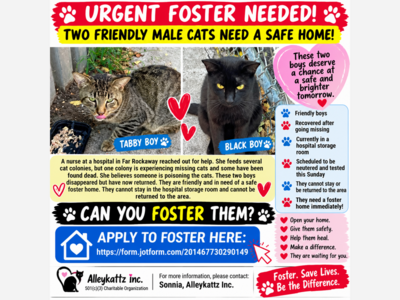
- Urgent Foster Homes Needed for Two Rescued Cats Amid Reports of Missing and Dead Cats in Far Rockaway Alleykattz Inc. appeals for immediate help after a hospital worker reports disturbing conditions affecting a local cat colony. Two friendly male cats need a safe place to go.
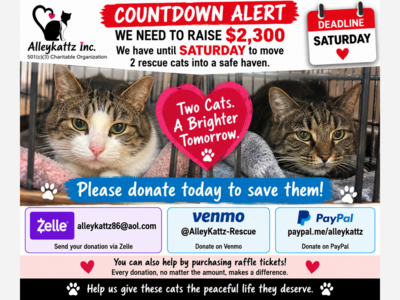
- Urgent Countdown: Alleykattz Inc. Seeks $2,165 to Move Two Feral Cats to Safety Before Saturday Deadline Animal rescue organization appeals for community donations to help relocate two feral cats to a safe haven.