50° and Patchy rain nearby
Long Island Animal Shelters and Rescues: Where to Adopt, Foster, Volunteer and Help



By Samantha Vogel
Long Island Daily News
LONG ISLAND, N.Y. — Every day across Nassau and Suffolk counties, dogs, cats, rabbits, birds, horses and other animals are waiting for homes.
Some are being cared for inside municipal shelters. Others are living at nonprofit adoption centers or with volunteer foster families. Still others are being helped by specialized rescue organizations dedicated to particular breeds, senior animals, community cats, rabbits, birds, horses and animals with special needs.
Together, these organizations form an important network for Long Island’s homeless, abandoned, surrendered and neglected animals.
For residents thinking about adding a pet to their family, adoption should be one of the first options considered.
Below is a Long Island Daily News guide to animal shelters and rescue organizations serving communities across Long Island.
Suffolk County Animal Shelters and Rescues
Suffolk County is home to municipal shelters as well as dozens of independent and nonprofit rescue organizations.
Organizations serving Suffolk County include:
- Almost Home Animal Rescue & Adoption — Patchogue
- Animal Rescue Fund of the Hamptons (ARF) — East Hampton
- Bideawee — Westhampton
- Baiting Hollow Farm Horse Rescue — Baiting Hollow
- Brookhaven Animal Shelter & Adoption Center — Brookhaven
- Carol’s Senior Pet Sanctuary — Bayport
- Grateful Paw Cat Shelter — East Northport
- Hearts of Love Cat Rescue & Adoption — Patchogue
- Hope For Cleo Animal Rescue — Smithtown
- Huntington Shelter & Adoption Center — East Northport
- Jaegers Run Animal Rescue — Port Jefferson area
- Kent Animal Shelter — Calverton
- Little Shelter Animal Rescue & Adoption Center — Huntington
- Long Island Feline Adoption Center — Smithtown
- Long Island Shetland Sheepdog Rescue — Stony Brook
- North Fork Animal Welfare League — North Fork
- Northport Cat Rescue Association — East Northport
- P.A.W.S. Greater Sayville Animal Rescue — Sayville
- Paws Unite People — East Setauket
- Priceless Parrot Preserve — Ridge
- Save-A-Pet Animal Rescue & Adoption Center — Port Jefferson Station
- Southampton Animal Shelter Foundation — Hampton Bays
- STAR Foundation — Middle Island
- Tender Loving Cats — North Babylon
- Town of Babylon Animal Shelter — West Babylon
- Town of Brookhaven Animal Shelter & Adoption Center — Brookhaven
- Town of Huntington Shelter & Adoption Center — East Northport
- Town of Islip Animal Shelter & Adopt-a-Pet Center — Central Islip
- Town of Smithtown Animal Shelter & Adoption Center — Smithtown
- Riverhead-area animal control and shelter services — Riverhead
These organizations vary considerably in size and mission. Some operate physical shelters, while others rely heavily or entirely on foster homes and volunteers.
Nassau County Animal Shelters and Rescues
Nassau County also has a large network of municipal and nonprofit animal-welfare organizations.
Among the organizations serving Nassau County and surrounding Long Island communities are:
- Bobbi and the Strays — Freeport
- Forgotten Friends of Long Island — Plainview
- Grateful Greyhounds — Long Island
- Last Hope Animal Rescue & Rehabilitation — Wantagh
- Long Beach Humane Society — Long Beach area
- Long Island Golden Retriever Rescue — Long Island
- Long Island Rabbit Rescue Group — Long Island
- Long Road Home Rescue — Manhasset area
- Nassau County SPCA — Nassau County
- North Shore Animal League America — Port Washington
- Ruff House Rescue — Long Island
- Town of Hempstead Animal Shelter — Wantagh
- Town of North Hempstead Animal Shelter — Port Washington
- Town of Oyster Bay Animal Shelter — Syosset
Don’t Forget Long Island’s Municipal Animal Shelters
Town-operated shelters are an especially important resource.
These facilities frequently take in stray and lost animals, respond to animal-control situations and care for animals while attempting to reunite them with their owners or find new homes.
Long Island’s municipal shelter network includes facilities serving the towns of Babylon, Brookhaven, Hempstead, Huntington, Islip, North Hempstead, Oyster Bay and Smithtown, along with animal-control services in other municipalities.
Residents looking to adopt should consider checking their local municipal shelter in addition to private rescue organizations.
There may be an incredible dog or cat just a few miles away waiting to meet them.
Rescue Goes Far Beyond Dogs and Cats
When people hear the words “animal rescue,” they often immediately think of dogs and cats.
But Long Island’s rescue community helps many other animals.
There are organizations and volunteers assisting rabbits, guinea pigs, birds, parrots, horses, farm animals and wildlife, as well as breed-specific rescues.
Priceless Parrot Preserve focuses on parrots and companion birds.
Long Island Rabbit Rescue Group helps abandoned and surrendered domestic rabbits.
Baiting Hollow Farm Horse Rescue works with horses.
Breed-specific organizations such as Long Island Golden Retriever Rescue, Grateful Greyhounds and Long Island Shetland Sheepdog Rescue focus their efforts on particular types of dogs.
This specialized work is important because caring for these animals can require knowledge, facilities and resources that traditional shelters may not always have.
Cats and the Community-Cat Crisis
Cats present another major challenge for animal-welfare organizations.
Long Island has numerous organizations dedicated to rescuing cats and kittens and addressing populations of outdoor community cats.
Organizations including Tender Loving Cats, Golden Paw Society, Northport Cat Rescue Association, Long Island Feline Adoption Center and other local groups work to give cats better futures.
Trap-Neuter-Return programs, commonly known as TNR, are another important part of community-cat management.
Through TNR, community cats are humanely trapped, spayed or neutered and returned when appropriate, helping prevent additional unwanted litters.
Preventing births is an important part of reducing the number of animals who ultimately require rescue.
Senior and Special-Needs Animals Deserve a Chance
One of the most heartbreaking realities of animal rescue is how easily certain animals can be overlooked.
Everyone notices the puppy.
Everyone wants to see the kittens.
But sitting quietly nearby may be a 10-year-old dog whose owner died.
There may be an adult cat who has watched kittens get adopted repeatedly.
There may be a dog who is frightened inside a kennel but completely different once outside.
There may be an animal requiring medication or an adopter willing to accommodate a disability.
There may be bonded animals who have spent their entire lives together.
Senior and special-needs animals deserve homes, too.
Adopters should consider asking shelter workers a simple question:
“Who has been here the longest?”
The answer may introduce you to an animal you otherwise never would have noticed.
Fostering Can Save More Than One Life
You don’t necessarily have to adopt an animal permanently to make a difference.
Become a foster.
Foster families temporarily care for animals until permanent homes are found.
For an animal, that can mean getting out of a stressful shelter environment and experiencing life inside a home.
For a rescue, every available foster home can potentially create room to help another animal.
Fostering can be especially important for kittens, puppies, animals recovering from medical procedures, seniors and animals that struggle in traditional shelter environments.
Can’t Adopt? Volunteer
Animal shelters and rescues depend heavily on volunteers.
Depending on the organization, volunteers may be needed to:
- Walk dogs
- Socialize cats
- Clean kennels
- Help with feeding
- Transport animals
- Assist at adoption events
- Photograph adoptable animals
- Help with social media
- Collect donations
- Fundraise
- Foster animals
- Help with administrative work
You don’t have to bring an animal home to help save one.
Sometimes donating a few hours of your time can make an enormous difference.
Donations Matter
Animal rescue is expensive.
There are veterinary examinations, vaccinations, spay and neuter procedures, medications, surgeries, food, litter, cleaning supplies and countless other expenses.
Some animals arrive needing emergency medical treatment.
Others require weeks or months of rehabilitation before they’re ready for adoption.
Before donating, residents should research an organization and make sure it is legitimate. Shelters and rescues often publish wish lists identifying the supplies they currently need most.
Even relatively small donations can add up when an entire community participates.
Sometimes the Most Powerful Thing You Can Do Is Share
Social media has become an important tool for animal rescue.
You may not be able to adopt.
You may not be able to foster.
You may not have money available to donate.
But you can still hit SHARE.
Every time someone shares the photograph and story of an adoptable animal, that animal reaches a new group of people.
Eventually, the right person may see that post.
One share can lead to another.
And somewhere along that chain could be an animal’s future family.
Adoption Must Be a Lifetime Commitment
Long Island Daily News strongly supports animal adoption, but adoption must also be responsible.
A pet is not an impulse purchase.
A dog may live 10, 12, 15 years or longer.
A cat can live well into its teens and sometimes beyond.
Before adopting, families need to consider the cost of veterinary care, food, grooming, training and emergencies.
They should consider their housing situation, work schedule, other pets and whether everyone in the household is prepared for the responsibility.
The goal isn’t simply getting animals out of shelters.
The goal is finding homes where they will never need a shelter again.
Long Island, Let’s Help Them Find Home
From Port Washington to Westhampton, from Wantagh to Brookhaven and from Huntington to the East End, people are working every day to give homeless animals another chance.
They need the community behind them.
So if you’re thinking about getting a pet, visit a shelter or reputable rescue first.
Ask to meet the senior.
Ask about the shy dog.
Meet the adult cat.
Ask which animal has been waiting the longest.
If you can’t adopt, foster.
If you can’t foster, volunteer.
If you can’t volunteer, donate.
And if you can’t donate, share.
There is always something we can do.
Calling All Long Island Animal Rescues
Long Island Daily News wants to hear from you.
If you represent a legitimate Long Island animal shelter, rescue organization, foster network, TNR group, wildlife organization, horse rescue, farm-animal sanctuary, bird rescue, rabbit rescue or breed-specific rescue, we invite you to introduce your organization to our readers.
Tell us where you’re located, what animals you help, what you currently need and, most importantly, which animals are waiting for homes.
We also invite Long Islanders who have adopted rescue animals to share their success stories and photographs.
Let’s fill our community with stories of animals who finally found their families.
Because every empty kennel represents something worth celebrating:
An animal went home.
🐾 ADOPT. FOSTER. VOLUNTEER. DONATE. SHARE.
Together, Long Island can save more lives.
By Samantha Vogel
Long Island Daily News
For updates, subscribe to our free newsletter!
Support your local news!
More News from Mount Sinai
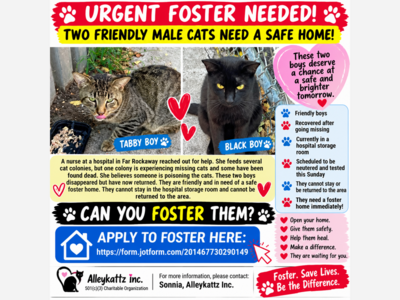
- Urgent Foster Homes Needed for Two Rescued Cats Amid Reports of Missing and Dead Cats in Far Rockaway Alleykattz Inc. appeals for immediate help after a hospital worker reports disturbing conditions affecting a local cat colony. Two friendly male cats need a safe place to go.
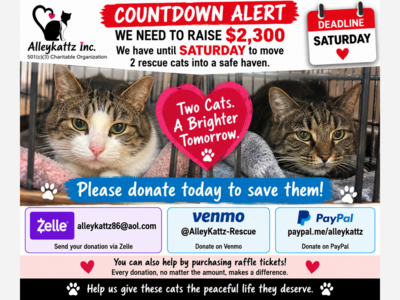
- Urgent Countdown: Alleykattz Inc. Seeks $2,165 to Move Two Feral Cats to Safety Before Saturday Deadline Animal rescue organization appeals for community donations to help relocate two feral cats to a safe haven.